
Injection Mold Assembly Process: Complete Engineering Guide
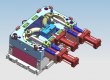
The injection mold assembly process is a critical stage in mold manufacturing that directly determines molding accuracy, product quality, and production stability. A properly assembled mold ensures smooth operation, long service life, and minimal defects during mass production.
1. Preparation Before Mold Assembly
Before starting assembly, all mold components must be thoroughly inspected and prepared to ensure dimensional accuracy and surface cleanliness.
- Clean all core and cavity components to remove oil, debris, and machining residue
- Verify part drawings against machining dimensions
- Check critical tolerances and mating surfaces
- Prepare assembly tools, gauges, and alignment equipment
Proper preparation reduces assembly errors and prevents downstream issues such as misalignment or excessive wear.
2. Core and Cavity Assembly
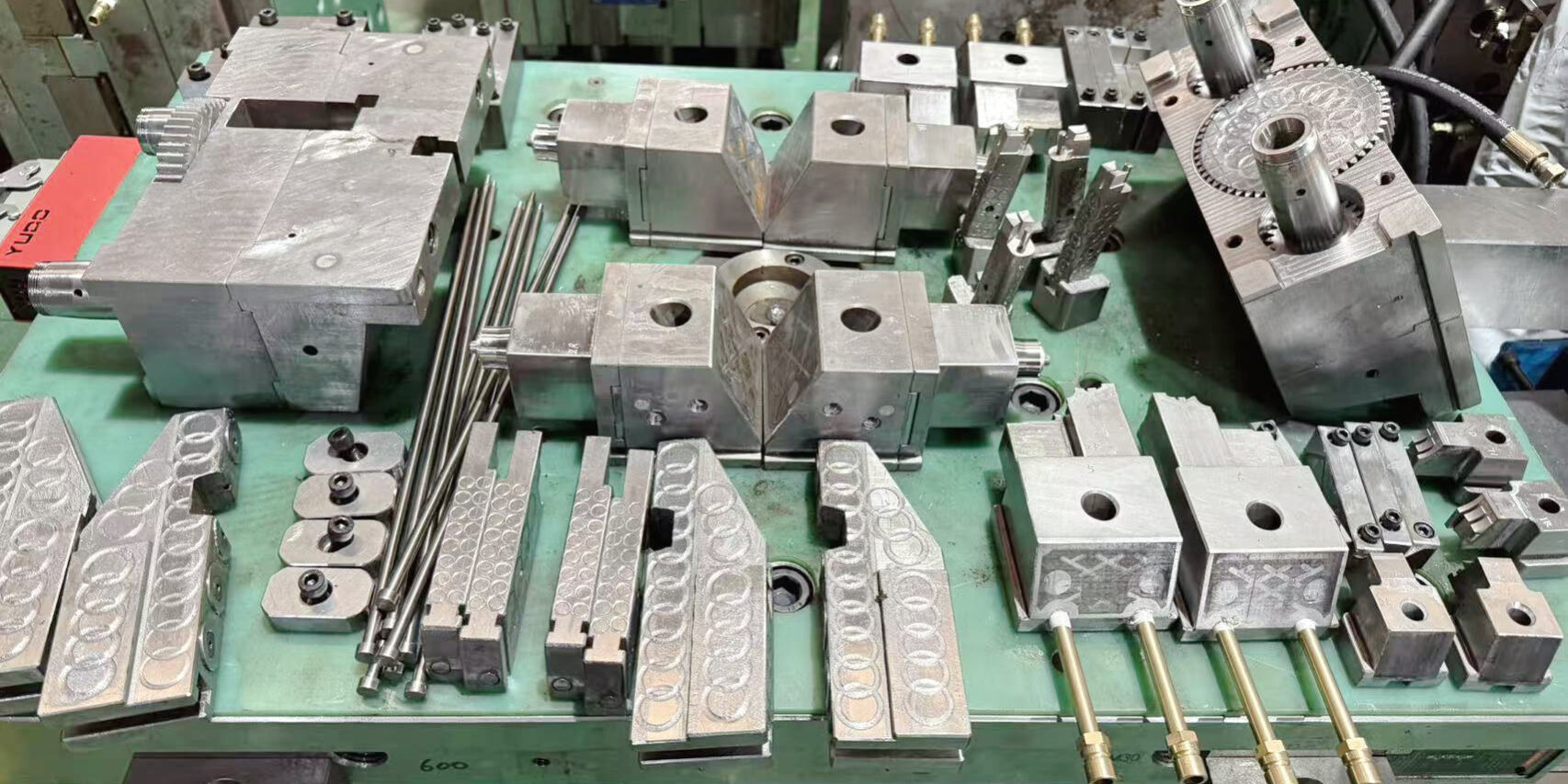
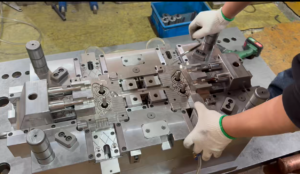
The core and cavity assembly forms the primary shaping structure of the mold. Precision alignment is essential to ensure consistent part geometry.
- Install core inserts into cavity base
- Ensure proper fit between locating surfaces
- Check parting line alignment
- Control fitting clearance within 0.01–0.02 mm where required
Even minor misalignment in this stage can lead to flash, dimensional deviation, or premature mold wear.
3. Slider and Lifter System Assembly
Sliding mechanisms are used to form undercuts and complex geometries. Their smooth movement is essential for stable molding cycles.
- Install slide blocks and guide rails
- Apply lubrication to reduce friction and wear
- Check locking mechanisms and travel limits
- Ensure smooth and repeatable motion without binding
Improper slider assembly may cause part damage, sticking, or inconsistent molding cycles.
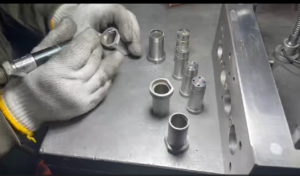
4. Ejection System Assembly
The ejection system ensures molded parts are released smoothly and without deformation.
- Install ejector pins, sleeves, and return pins
- Check ejector plate movement
- Ensure uniform ejection force distribution
- Confirm reset system operation
Balanced ejection prevents part sticking, white marks, or deformation during demolding.
5. Cooling System and Hot Runner Assembly
Cooling channels and hot runner systems directly affect cycle time and product consistency.
- Connect cooling lines and verify sealing
- Check water flow uniformity
- Install hot runner manifold and heaters
- Test temperature control stability
Efficient thermal control reduces cycle time and improves dimensional stability of molded parts.
6. Mold Closing and Function Testing
After full assembly, the mold must be tested for mechanical function before trial production.
- Perform dry cycle mold closing test
- Check parting line contact
- Verify slider, ejector, and core actions
- Inspect for interference or abnormal resistance
7. Mold Trial (T1 Testing)
The first mold trial verifies whether the assembled mold meets design and production requirements.
- Conduct initial injection trial (T1)
- Inspect product dimensions and appearance
- Identify defects such as flash, sink marks, or short shots
- Adjust mold components if necessary
Mold trial is a key validation step before mass production approval.
8. Quality Control Standards in Mold Assembly
Strict quality control ensures long-term mold reliability and stable production performance.
- Alignment accuracy: ±0.02 mm or better
- Sliding clearance: 0.01–0.015 mm depending on structure
- Surface finish inspection of mating parts
- Full functional testing before shipment
9. Common Mold Assembly Issues
- Misalignment leading to flash or burrs
- Slider sticking due to poor lubrication or tolerance mismatch
- Uneven ejection causing part deformation
- Cooling imbalance affecting cycle time
Conclusion
Injection mold assembly is a precision-driven process that requires strict control of tolerances, careful mechanical fitting, and systematic testing. A well-assembled mold ensures stable production, high-quality parts, and reduced maintenance costs over time.
If you are looking for professional injection mold design and manufacturing support, proper assembly quality is one of the most important factors to evaluate before starting mass production.