

What is Injection Molding Tolerance?
Injection molding tolerance refers to the allowable variation in the dimensions of a plastic part during manufacturing. In simple terms, it defines how much a finished part can deviate from its intended design size while still being considered acceptable.
Tolerances are critical in plastic injection molding because even small dimensional variations can affect part fit, function, and assembly—especially in high-precision industries like automotive and electronics.
For example, a tolerance of ±0.02 mm means the actual part dimension can vary slightly within that range without causing issues.
Injection Molding Tolerance Standards Explained
Why Tolerance Matters in Injection Molding
Maintaining tight tolerances ensures:
- Proper fit and assembly of components
- Consistent product quality in mass production
- Reduced risk of defects and rework
- Improved product performance and durability
In high-volume manufacturing, poor tolerance control can lead to large-scale production issues and increased costs.
Injection Molding Tolerance Standards
There are general industry standards used to define acceptable tolerances in injection molding.
General Tolerance Range
Typical tolerances for plastic injection molded parts:
- Standard tolerance: ±0.05 mm to ±0.10 mm
- Precision parts: up to ±0.02 mm
- Micro or high-precision parts: tighter than ±0.01 mm (depending on material and tooling)
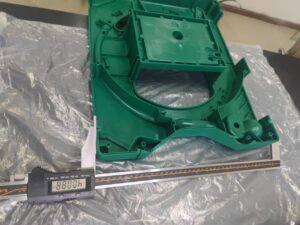
Injection Molding Tolerance Standards Explained
Factors Affecting Tolerance
Several factors influence achievable tolerances:
1. Material Selection
Different plastics shrink differently during cooling. For example:
- ABS: stable and easy to control
- PA66 GF: stronger but higher shrinkage variation
2. Mold Design
- Gate location
- Cooling system
- Mold structure
All directly impact dimensional stability.
3. Part Design
- Wall thickness consistency
- Geometry complexity
- Rib and boss design
Poor design leads to warpage and dimensional variation.
4. Process Control
- Injection pressure
- Temperature
- Cooling time
Stable processing = consistent tolerances.
International Tolerance Standards
Injection molding tolerances are often guided by international standards such as:
- DIN 16742 (Plastic molded parts tolerance standard)
- ISO 20457 (Plastics mold design standard)
These standards define acceptable deviation ranges based on part size, material, and application.
Automotive Injection Molding Tolerance Requirements
The automotive industry requires significantly tighter tolerances compared to general consumer products.
Key Requirements:
- High dimensional accuracy for assembly compatibility
- Long-term stability under heat and stress
- Consistent quality across mass production
Typical automotive tolerance:
- ±0.02 mm to ±0.05 mm depending on part function
Why Automotive Tolerances Are Stricter
Automotive components must:
- Fit precisely with metal and electronic parts
- Withstand vibration and temperature changes
- Maintain performance over long service life
Even minor deviations can lead to:
- Assembly failure
- Noise or vibration issues
- Product recalls
For high-precision automotive components, learn more about our
automotive injection molding services and how we ensure consistent quality in mass production.
How to Achieve Tight Tolerances in Injection Molding
To meet strict tolerance requirements, manufacturers must focus on:
1. DFM (Design for Manufacturability)
Optimize part design before tooling to reduce defects.
2. Precision Mold Manufacturing
High-quality molds with accurate machining ensure dimensional consistency.
3. Advanced Simulation (Moldflow)
Predict shrinkage, warpage, and optimize design before production.
4. Stable Production Process
Maintain consistent temperature, pressure, and cycle times.
5. Quality Inspection
- First article inspection (FAI)
- In-process inspection
- Final quality control
Common Tolerance Challenges
Manufacturers often face:
- Warpage in large or thin parts
- Sink marks affecting dimensions
- Material shrinkage variation
- Inconsistent cooling
These issues must be addressed through design, tooling, and process optimization.
FAQ – Injection Molding Tolerances
What is a typical tolerance for injection molded parts?
Standard tolerances range from ±0.05 mm to ±0.10 mm, while precision parts can achieve ±0.02 mm or tighter.
Can injection molding achieve tight tolerances?
Yes, with proper mold design, material selection, and process control, high-precision tolerances can be achieved.
Which materials are best for tight tolerances?
Materials like ABS and PC offer better dimensional stability, while glass-filled materials require more control.
Why is tolerance important in automotive parts?
Tight tolerances ensure proper fit, safety, and long-term performance in automotive applications.
Request a Quote for High-Precision Injection Molding
Looking for a reliable partner who can meet strict tolerance requirements?
We provide high-precision plastic injection molding with tight tolerance control for automotive and industrial applications.
- Free DFM analysis
- Fast quotation within 24 hours
- Professional engineering support
Contact us today to discuss your project