
Injection Molded Exhaust Fan for Pet Products: Engineering Experience and Manufacturing Solutions
Pet product development places specific requirements on plastic components, especially in applications involving ventilation, durability, noise control, and safety in daily use environments.
In injection molded exhaust fan projects for pet-related products, key engineering challenges typically include structural stability, airflow efficiency, material fatigue resistance, and long-term operational reliability.
This page summarizes the engineering considerations and manufacturing solutions applied in such projects.

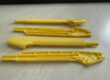
Exhaust fan for pet
1. Engineering Requirements in Pet Exhaust Fan Applications
Pet-related plastic components are typically exposed to:
- Continuous operation environments
- Mechanical vibration
- Hair or dust accumulation
- Low-noise performance requirements
- Safety constraints for animal contact
These conditions require the product structure to balance strength, airflow efficiency, and long-term stability.

2. Key Design Challenges in Injection Molded Fan Structures
2.1 Airflow Efficiency vs Structural Strength
Fan blade geometry must maintain airflow performance while ensuring:
- No deformation under rotation
- Stable balance during operation
- Controlled weight distribution
Poor balance design can lead to vibration and noise issues during use.
2.2 Material Selection for Long-Term Operation
Materials used in pet-related fan systems must consider:
- Fatigue resistance under continuous rotation
- Thermal stability
- Impact resistance during handling or cleaning
Improper material selection may lead to cracking or deformation over time.
2.3 Molded Structure Stability
Injection molding of fan components requires attention to:
- Uniform wall thickness to prevent imbalance
- Precise mold alignment for rotational symmetry
- Gate position control to avoid flow imbalance
Even small deviations can affect operational stability.
2.4 Noise and Vibration Control
Noise issues are often related to:
- Imbalanced blade geometry
- Inconsistent material density
- Assembly tolerance stack-up
Engineering correction is typically required at both design and mold stages.
3. Manufacturing Approach for Pet Product Components
Pet-related plastic components such as exhaust fans are typically produced using:
- Precision injection molding
- Balanced multi-cavity tooling (if mass production is required)
- Controlled cooling systems to maintain dimensional stability
Tooling design focuses on:
- Cycle stability
- Dimensional repeatability
- Reduced post-processing requirements
4. Engineering Problem-Solving Approach
In production of pet exhaust fan components, common issues include:
- Vibration during operation
- Deformation under long-term load
- Assembly misalignment
- Inconsistent rotation performance
Engineering adjustments typically involve:
- Redesign of rib structure for stiffness improvement
- Optimization of gate location for balanced flow
- Material adjustment for fatigue resistance
- Tightening of critical tolerances
5. Integrated Manufacturing Capability
For pet-related injection molded components, production typically requires coordination across:
- Product design validation (DFM)
- Mold design and tooling manufacturing
- Injection molding process optimization
- Assembly fit verification
A controlled engineering workflow reduces redesign cycles and improves production stability.
Conclusion
Pet exhaust fan components require careful engineering integration between design, materials, and molding process.
Successful production depends on:
- Structural balance and stability
- Material performance under long-term use
- Precision mold design and process control
This type of product reflects the importance of early-stage engineering validation and coordinated manufacturing execution.