
How to Customize Plastic Products: A Practical Guide from Idea to Production
Customizing a plastic product is a structured engineering process that extends beyond simple manufacturing. It involves a critical alignment of design feasibility, material physics, and tooling precision.
In our 25+ years of experience in the Shanghai molding industry, we have found that the majority of production failures originate from unrefined requirements or neglected DFM (Design for Manufacturing) principles at the early stage. This guide outlines the technical roadmap to move a project from concept to stable mass production.
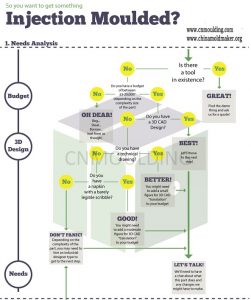
1. Essential Technical Inputs
Before engaging with a mold maker, ensure your project data is complete. Precise inputs lead to accurate feasibility assessments and cost estimates:
3D Engineering Files: Preferred formats are STEP (.stp) or IGES (.igs). High-fidelity geometry is required for CNC path planning.
Application Environment: Define mechanical loads, chemical exposure, UV requirements, and operating temperature ranges.
Volume & Lifecycle: Specify if you need 50 prototypes, 5,000 “bridge” parts, or 500,000+ mass production shots.
Tolerance Requirements: Define critical dimensions (e.g., ISO 2768-m or specific micron-level tolerances for mating parts).
Surface Specification: Identify VDI texture, SPI polish, or specific aesthetic requirements (e.g., high-gloss vs. matte).
2. DFM: Is the Design Optimized for Molding?
Not all geometries are suitable for the injection process. A design must be evaluated against physical manufacturing constraints to avoid defects:
Wall Thickness Consistency: Abrupt changes in thickness cause differential cooling, leading to sink marks and warping. Maintain a uniform wall where possible.
Draft Angles: A minimum draft of 0.5° to 1.5° is mandatory for part ejection. For textured surfaces, this should increase to 3° or more to prevent dragging.
Undercuts & Mechanics: Identify features that cannot be pulled linearly. These will require slides, lifters, or core-pulling mechanisms, which increase mold complexity and cost.
Rib Design: To avoid sink marks on aesthetic surfaces, the thickness of a rib should ideally be 50% to 70% of the nominal wall thickness.
3. The Development Roadmap
A disciplined development cycle reduces the risk of expensive “hard tool” modifications:
Engineering Review (DFM): Analyzing the 3D model for moldability and gate placement.
Prototyping (Functional Validation): Using CNC machining (in the production resin) or SLA/SLS to verify fit and function.
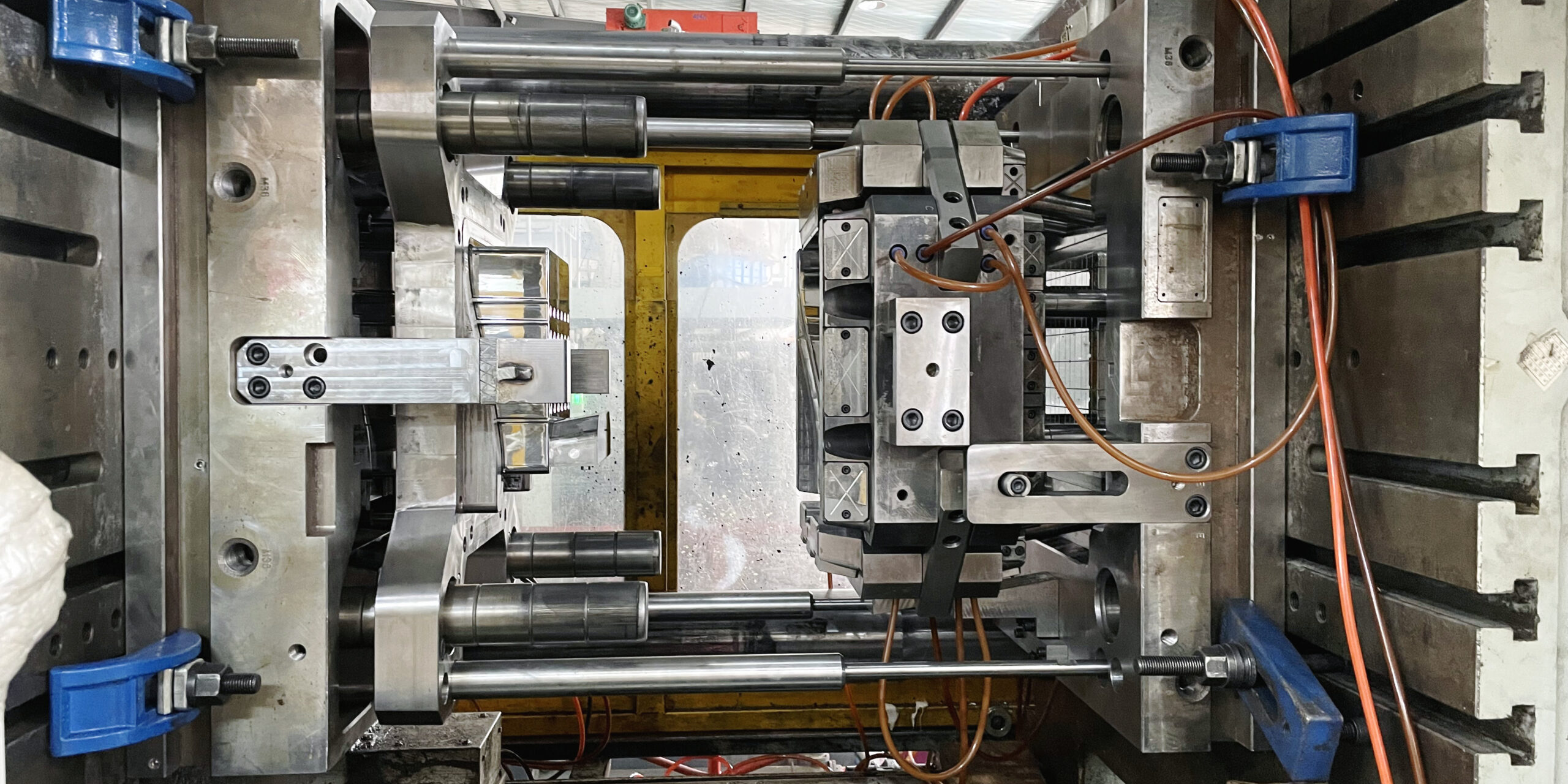
Mold Design & Tooling: Selecting steel grades (e.g., S136, H13, NAK80) based on resin corrosivity and expected mold life.
T1 Sampling & Validation: The first shots from the tool are measured against the 2D drawing to verify dimensional compliance.
Pilot Run & Mass Production: Establishing a stable “Process Window” (pressure, temperature, cycle time) for consistent quality.
4. Understanding Tooling vs. Unit Cost
Cost optimization requires a balance between initial investment and long-term efficiency:
Tooling Cost: A one-time investment in the mold. Complexity (slides/hot runners) and steel quality drive this cost.
Unit Cost: Driven by material price, machine tonnage, and cycle time.
The Logic: Investing in a high-quality multi-cavity hardened steel mold will increase initial costs but significantly lower the unit price and maintenance overhead for high-volume projects.
5. Selecting the Manufacturing Method
Match your production stage with the appropriate technology to avoid over-engineering:
Prototyping (<50 pcs): CNC Machining or 3D Printing. No tooling investment; high cost per part.
Low-Volume / Bridge Tooling (100 – 5,000 pcs): Aluminum or pre-hardened steel (P20) molds. Faster lead times; limited mold life.
Mass Production (10,000+ pcs): Hardened steel molds (H13/S136). High durability; optimized for fast cycle times and automation.
6. Common Engineering Pitfalls to Avoid
Premature Tooling: Never start mold manufacturing before the design is “Frozen.” Modifying hardened steel is time-consuming and costly.
Neglecting Shrinkage: Different resins (e.g., PE vs. PC) have vastly different shrinkage rates. Material must be finalized before the mold is cut.
Over-Complexity: Excessive part complexity increases the risk of “Flash” and mechanical failure in the mold.
Ignoring Gate Vestiges: Ensure the gate location does not interfere with the assembly or the visual appearance of the part.
7. Practical Recommendations for Engineers
Keep it Simple: Complexity is the enemy of stability. If a feature can be simplified, do it.
Standardize: Use standard mold components (e.g., LKM, HASCO, DME) to ensure ease of maintenance.
Early Collaboration: Involve the mold engineer during the 3D design phase. A 10-minute DFM discussion can often save 2 weeks of mold modification later.
Conclusion
Successful plastic product customization is the result of clear technical documentation and proactive problem-solving. By identifying manufacturing constraints early and selecting the correct tooling strategy, you ensure a stable transition from a digital model to a high-quality physical product.
For technical inquiries or DFM reviews, contact our engineering department in Shanghai.