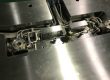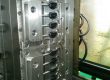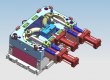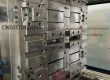

Top 5 Benefits of Plastic Injection Molding
Why Plastic Injection Molding Is Widely Used in Modern Manufacturing
Plastic injection molding is one of the most efficient and cost-effective manufacturing processes used today. It enables manufacturers to produce high-quality plastic parts with excellent consistency, tight tolerances, and fast production speed.
From automotive and medical components to electronics housings and consumer products, injection molding has become the preferred manufacturing solution for companies requiring scalable and reliable production.
At CNMOULDING, we provide custom plastic injection molding services for global customers across multiple industries. With advanced tooling capabilities and strict quality control systems, we help customers transform product concepts into mass-produced components efficiently.
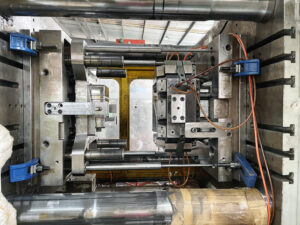
Injection Mold Manufacturing Services in China
1. High Production Efficiency
One of the biggest advantages of plastic injection molding is its extremely high production efficiency.
Once the injection mold is completed, the manufacturing cycle becomes highly automated. Modern injection molding machines can produce thousands or even millions of identical plastic parts with consistent quality.
Benefits include:
- Fast cycle times
- Automated mass production
- Reduced labor cost
- Stable repeatability
- High-volume manufacturing capability
Compared with traditional machining or manual fabrication, injection molding dramatically increases production speed.
2. Excellent Dimensional Accuracy & Consistency
Plastic injection molding is ideal for manufacturing precision plastic components with tight tolerances and stable dimensions.
Advanced mold design and modern molding equipment allow manufacturers to maintain excellent consistency across large production volumes.
Injection molding is commonly used for:
- Automotive components
- Medical device housings
- Electronic enclosures
- Precision connectors
- Industrial plastic parts
Precision injection molding can achieve tolerances as tight as:
±0.01 mm\pm 0.01\ \mathrm{mm}
depending on material selection, mold design, and part geometry.
3. Low Cost for Mass Production
Although injection mold manufacturing requires an initial tooling investment, the per-part production cost becomes very low during mass production.
This makes injection molding one of the most economical manufacturing processes for medium and high-volume production.
Cost advantages include:
- Low material waste
- Fast production cycles
- Reduced manual labor
- High automation
- Multi-cavity mold capability
For large production runs, the tooling cost is distributed across many parts, significantly lowering unit cost.
4. Wide Range of Material Options
Plastic injection molding supports a broad selection of thermoplastics and engineering-grade materials.
Common materials include:
- ABS
- PP
- PC
- Nylon (PA)
- POM
- PBT
- TPU
- TPE
- PEEK
Different materials provide different properties such as:
- Heat resistance
- Chemical resistance
- Impact strength
- Electrical insulation
- Flexibility
- Transparency
For example, medical injection molding often uses PP, PC, ABS, and PEEK because of their stability and sterilization compatibility.
5. Design Flexibility & Complex Geometry
Injection molding allows engineers to manufacture highly complex plastic parts that would be difficult or expensive to produce using other manufacturing methods.
Modern mold technologies support:
- Thin-wall molding
- Insert molding
- Overmolding
- Hot runner systems
- Multi-cavity molds
- IMD decoration
- Complex internal structures
Design features such as ribs, bosses, clips, undercuts, and textured surfaces can all be integrated directly into the mold design.
This enables manufacturers to improve product functionality while reducing secondary assembly operations.
Additional Advantages of Plastic Injection Molding
Beyond the top five benefits, injection molding also provides:
Excellent Surface Finish
Injection molding can produce:
- Glossy surfaces
- Matte textures
- Polished cosmetic parts
- Textured industrial surfaces
Different surface finishes can be achieved directly through mold surface treatment.
Reduced Material Waste
Most thermoplastic materials used in injection molding can be recycled and reused during production.
Compared with subtractive machining processes, injection molding minimizes raw material waste and improves manufacturing efficiency.
Strong Scalability
Injection molding supports production quantities ranging from prototype batches to full-scale mass production.
Manufacturers can start with low-volume tooling and later scale to high-volume production molds.
Industries That Use Plastic Injection Molding
Plastic injection molding is widely used in many industries.
Automotive Industry
Applications include:
- Interior trim components
- Sensor housings
- Connectors
- EV battery components
Medical Industry
Used for:
- Medical device housings
- Disposable products
- Laboratory equipment
- Diagnostic components
Consumer Electronics
Including:
- Electronic enclosures
- Smart device housings
- Connector systems
- Wearable device parts
Industrial Equipment
Used for:
- Mechanical assemblies
- Automation systems
- Industrial connectors
- Functional engineering parts
Why Global Companies Choose Injection Molding
Injection molding combines:
- High precision
- Fast production
- Low unit cost
- Excellent repeatability
- Strong material flexibility
- Design freedom
This makes it one of the most important manufacturing technologies in modern industrial production.
FAQ
What is plastic injection molding?
Plastic injection molding is a manufacturing process where molten plastic material is injected into a mold cavity to produce plastic parts.
What are the main advantages of injection molding?
The main advantages include:
- High production efficiency
- Low mass-production cost
- Precision manufacturing
- Material flexibility
- Complex geometry capability
Is injection molding suitable for low-volume production?
Yes. Rapid tooling and bridge molds can support prototype and low-volume production before mass manufacturing.
What materials are commonly used in injection molding?
Common materials include ABS, PP, PC, Nylon, POM, TPU, and PEEK.
Which industries use injection molding?
Injection molding is widely used in automotive, medical, electronics, industrial, and consumer product industries.
Looking for Professional Plastic Injection Molding Services?
CNMOULDING provides:
- Precision injection molds
- Plastic injection molding
- Rapid prototyping
- Overmolding solutions
- Low-volume manufacturing
- Global delivery support
Our engineering team helps customers optimize product design, reduce manufacturing cost, and improve production efficiency.
Contact us today for a fast quotation.
- 24-Hour Response
- Professional Engineering Support
- Strict Quality Control
- Competitive Manufacturing Cost
- Worldwide Shipping
Email: webmaster@cnmoulding.com
Phone: +86-21-52913487