

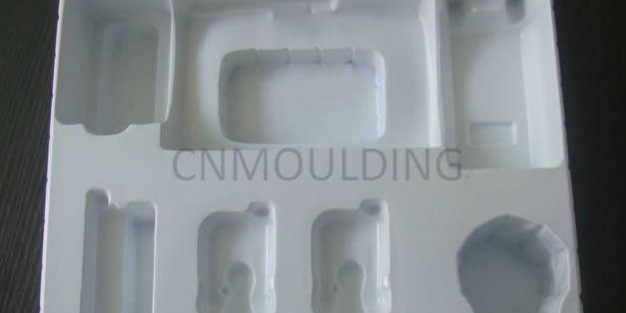
Thermoformed Plastic Products: Market Trends, Applications and Manufacturing Guide 2026
Thermoformed plastic products are widely used in packaging, automotive, medical, electronics, and industrial applications due to their cost efficiency, lightweight properties, and fast production capabilities. As global industries increasingly demand sustainable and custom plastic solutions, the thermoforming market continues to grow rapidly.
Compared with traditional plastic manufacturing methods, thermoforming offers lower tooling costs, faster production lead times, and excellent flexibility for both low-volume and high-volume production. Today, thermoformed plastic components are commonly used for food packaging trays, medical device packaging, automotive interior panels, equipment housings, and protective industrial packaging.
As a professional plastic manufacturing company in China, CNMOULDING provides custom thermoforming, vacuum forming, and injection molding services for global customers across multiple industries.
What Are Thermoformed Plastic Products?
Thermoformed plastic products are manufactured by heating a thermoplastic sheet until it becomes soft and flexible, then forming it over a mold using vacuum pressure, air pressure, or mechanical force. After cooling, the formed plastic part is trimmed and finished into the final product.
Thermoforming is one of the most efficient plastic manufacturing methods for producing lightweight and cost-effective plastic parts.
Common thermoforming processes include:
Vacuum Forming
Vacuum forming uses vacuum pressure to pull heated plastic sheets tightly against a mold surface. It is widely used for packaging trays, plastic covers, and large lightweight components.
Pressure Forming
Pressure forming combines vacuum and compressed air to create highly detailed plastic parts with improved surface finish and sharper features.
Thin Gauge Thermoforming
Thin gauge thermoforming is mainly used for disposable packaging products such as food trays, clamshell packaging, cups, and containers.
Heavy Gauge Thermoforming
Heavy gauge thermoforming is suitable for durable industrial products, automotive parts, medical equipment housings, and machine covers.
The thermoforming process involves several important manufacturing stages to ensure product quality, dimensional accuracy, and production efficiency.
Step 1: Plastic Sheet Heating
Thermoplastic sheets such as ABS, PET, PP, PS, PVC, or HDPE are heated to a forming temperature where the material becomes soft and flexible.
Step 2: Mold Forming
The heated sheet is positioned over a mold. Depending on the product requirements, vacuum pressure, compressed air, or mechanical forming methods are applied.
Step 3: Vacuum or Pressure Forming
The plastic sheet conforms to the mold shape during the forming process. This stage determines the final geometry and surface quality of the product.
Step 4: Cooling
After forming, the plastic part is cooled to maintain dimensional stability and structural strength.
Step 5: CNC Trimming and Finishing
Excess material is removed using CNC trimming equipment to achieve precise edges, holes, and final dimensions.
Additional secondary processes may include:
- Silk-screen printing
- Assembly
- Ultrasonic welding
- Surface texturing
- Painting
- Quality inspection
Common Materials Used in Thermoforming
Different thermoplastic materials are selected based on product performance requirements, durability, food safety, and environmental conditions.
ABS (Acrylonitrile Butadiene Styrene)
ABS offers excellent impact resistance and is commonly used for automotive interior parts, equipment housings, and industrial covers.
PET and RPET
PET and recycled PET (RPET) are widely used in food packaging applications because of their clarity, recyclability, and food-grade compliance.
PP (Polypropylene)
PP provides good chemical resistance and flexibility, making it suitable for food containers and medical packaging.
PVC
PVC offers excellent formability and durability for industrial packaging and protective covers.
HDPE
HDPE provides strong impact resistance and chemical stability for industrial and transportation applications.
PLA Bioplastics
PLA is a biodegradable material increasingly used in environmentally friendly packaging applications.
Thermoforming vs Injection Molding
Thermoforming and injection molding are both widely used plastic manufacturing technologies, but each process has unique advantages depending on product design, production volume, and tooling budget.
| Feature | Thermoforming | Injection Molding |
|---|---|---|
| Tooling Cost | Lower | Higher |
| Production Startup Time | Faster | Longer |
| Best Production Volume | Low to Medium | Medium to High |
| Part Size Capability | Large Parts | Small to Medium Parts |
| Surface Detail | Moderate to High | Excellent |
| Wall Thickness Control | Moderate | Excellent |
| Material Waste | Low | Very Low |
| Ideal Applications | Packaging, panels, trays | Complex precision parts |
Thermoforming is often preferred for large plastic parts and projects requiring lower initial investment. Injection molding is more suitable for highly complex parts and large-volume production.
Many customers combine thermoforming and injection molding in the same project to optimize manufacturing costs and product performance.
Major Applications of Thermoformed Plastic Products
Thermoformed plastics are used across numerous industries due to their flexibility, lightweight properties, and cost advantages.
Food Packaging Industry
Food packaging is one of the largest thermoforming markets worldwide.
Common thermoformed food packaging products include:
- Disposable trays
- Clamshell containers
- Fruit packaging
- Meat trays
- Bakery packaging
- Takeout containers
Thermoformed packaging offers excellent product visibility, lightweight transportation, and efficient mass production capabilities.

Medical thermoforming applications require high cleanliness standards and precision manufacturing.
Common medical products include:
- Sterile medical trays
- Medical device packaging
- Diagnostic equipment housings
- Surgical instrument trays
Medical thermoforming supports disposable and sterile packaging solutions while reducing manufacturing costs.
Automotive Industry
Automotive manufacturers use thermoformed components to reduce vehicle weight and improve manufacturing efficiency.
Common applications include:
- Interior door panels
- Dashboard components
- Trunk liners
- Battery covers
- Protective covers
Heavy gauge thermoforming is especially suitable for large automotive interior components
Electronics Industry
Thermoformed plastics are widely used in electronics packaging and equipment protection.
Applications include:
- ESD trays
- Protective packaging
- Equipment covers
- Component handling trays
Custom thermoforming helps manufacturers reduce transportation damage and improve packaging efficiency.
Industrial Equipment
Industrial thermoformed parts are used for:
- Machine guards
- Equipment housings
- Transportation trays
- Material handling containers
Heavy gauge thermoforming provides durability and impact resistance for industrial environments.
Sustainable Thermoforming and Eco-Friendly Materials
Sustainability is becoming a major trend in the global thermoforming industry.
Manufacturers increasingly use recyclable and environmentally friendly materials such as:
- RPET recycled plastics
- PLA biodegradable materials
- Recyclable PP packaging
- Lightweight material designs
Thermoforming itself is also considered a relatively efficient manufacturing process because it reduces tooling costs, shortens production cycles, and minimizes material waste.
Many global packaging companies are transitioning toward sustainable thermoformed packaging solutions to comply with environmental regulations and consumer demand.
Global Thermoforming Market Trends
The global thermoformed plastics market continues to expand due to increasing demand from packaging, healthcare, automotive, and consumer goods industries.
Key industry trends include:
Growth of Food Packaging
The expansion of ready-to-eat food, online delivery services, and retail packaging drives significant demand for thermoformed packaging products.
Medical Packaging Expansion
The healthcare sector increasingly relies on sterile disposable packaging and medical trays.
Lightweight Automotive Components
Automotive manufacturers continue to reduce vehicle weight for fuel efficiency and EV performance.
Sustainable Packaging Demand
Eco-friendly and recyclable plastic materials are becoming essential in global packaging markets.
Automation and Smart Manufacturing
Advanced CNC trimming, robotic automation, and precision forming technologies improve manufacturing efficiency and product consistency.
Why China Is a Leading Thermoforming Manufacturing Hub
China has become one of the world’s largest thermoforming manufacturing centers due to its strong supply chain capabilities and cost advantages.
Key advantages include:
Competitive Tooling Costs
Chinese thermoforming manufacturers can provide lower tooling and mold development costs compared with Europe and North America.
Fast Lead Times
Integrated manufacturing systems allow faster mold production and shorter project timelines.
Flexible Production Capacity
Chinese factories support both low-volume prototyping and high-volume mass production.
Complete Manufacturing Supply Chain
China offers integrated services including:
- Mold manufacturing
- Thermoforming
- CNC trimming
- Assembly
- Packaging
- Export logistics
Export Experience
Experienced Chinese manufacturers support global OEM and ODM projects for customers worldwide.
Why Choose CNMOULDING for Thermoforming Services
CNMOULDING provides custom thermoforming and plastic manufacturing solutions for international customers across multiple industries.
Our Thermoforming Capabilities
- Vacuum forming
- Pressure forming
- Heavy gauge thermoforming
- Thin gauge thermoforming
- CNC trimming
- Prototype development
- OEM and ODM manufacturing
Materials We Support
- ABS
- PET
- RPET
- PP
- PVC
- HDPE
- Acrylic
- PC
Industries We Serve
- Food packaging
- Automotive
- Medical
- Electronics
- Industrial equipment
- Consumer products
Our Advantages
- Competitive manufacturing cost
- Fast tooling development
- Strict quality control
- Flexible MOQ
- Export manufacturing experience
- Integrated production capabilities
- Reliable international shipping support
CNMOULDING works closely with customers from product design and prototyping to mass production and export delivery.
Frequently Asked Questions
What is thermoforming?
Thermoforming is a plastic manufacturing process where heated plastic sheets are formed over molds to create packaging, trays, panels, housings, and custom plastic products.
What materials are commonly used in thermoforming?
Common thermoforming materials include ABS, PET, PP, PVC, HDPE, acrylic, and biodegradable PLA plastics.
What is the difference between thermoforming and injection molding?
Thermoforming uses heated plastic sheets formed over molds, while injection molding injects molten plastic into enclosed molds. Thermoforming generally has lower tooling costs and faster lead times.
Is thermoforming suitable for low-volume production?
Yes. Thermoforming is highly suitable for low-volume and medium-volume production because tooling costs are lower compared with injection molding.
What industries use thermoformed plastic products?
Industries using thermoformed products include food packaging, medical devices, automotive, electronics, industrial equipment, and consumer goods.
Is thermoforming environmentally friendly?
Thermoforming can support sustainable manufacturing through recyclable materials, lightweight packaging, and reduced production waste.
Request Custom Thermoforming Solutions
If you are looking for a reliable thermoforming manufacturer in China, CNMOULDING can provide custom plastic forming solutions for packaging, industrial, medical, and automotive applications.
Our engineering team supports product development, prototyping, tooling, thermoforming production, CNC trimming, and international export services.
Contact CNMOULDING today to discuss your custom thermoforming project and request a free manufacturing quotation.
