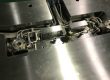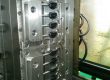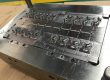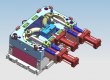

Injection mold manufacturing is a critical step in plastic part production. The quality of the mold directly determines part accuracy, surface finish, and long-term production stability.
A well-designed and precisely manufactured mold ensures consistent output, reduces defects, and improves overall production efficiency.
Mold Design
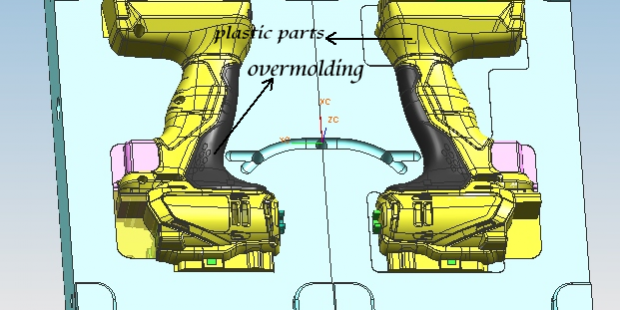
Mold design is the foundation of the entire manufacturing process. Before any machining begins, engineers must evaluate part geometry, material behavior, and production requirements.
Key considerations in mold design:
- Part structure and wall thickness
- Shrinkage rate of the selected material
- Gate type and location
- Cooling system layout
- Ejection mechanism
A proper design helps prevent common issues such as warpage, sink marks, and short shots before production even starts.
In most projects, DFM (Design for Manufacturability) analysis is conducted to optimize the design and reduce risk.
CNC Machining
After the mold design is finalized, CNC machining is used to manufacture the main mold components with high precision.
What CNC machining does:
- Cuts mold cavities and cores
- Creates precise geometries based on CAD data
- Ensures dimensional accuracy
Advantages:
- High precision (tight tolerances)
- Repeatability
- Suitable for complex mold structures
CNC machining is the primary process for shaping mold steel and defining the final geometry of the mold.
EDM (Electrical Discharge Machining)
EDM is used to create detailed features that cannot be achieved through standard CNC machining.
When EDM is used:
- Sharp internal corners
- Deep ribs or narrow slots
- Complex cavity details
How it works:
EDM uses electrical sparks to erode material from the mold surface, allowing extremely precise and intricate shapes.
Advantages:
- High precision for complex geometries
- Ability to machine hardened steel
- Excellent for fine details
EDM is essential for high-precision molds, especially in automotive and electronic components.
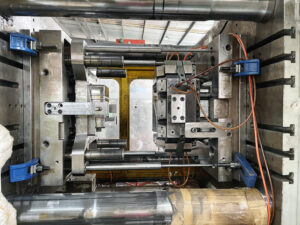
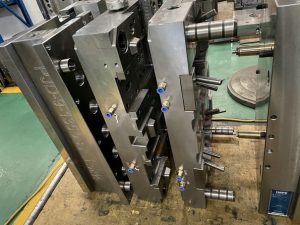
Mold Assembly and Finishing
After machining, all mold components are assembled and tested.
This stage includes:
- Fitting and alignment of mold components
- Polishing and surface finishing
- Installation of cooling channels and ejector systems
Surface finishing plays a key role in the final appearance of plastic parts.
Mold Testing (T1 Sampling)
Before mass production, the mold undergoes trial runs (T1 samples).
Purpose of T1 testing:
- Verify part dimensions
- Identify defects (warpage, sink marks, etc.)
- Adjust process parameters
Multiple iterations may be required to achieve optimal results.
Why Mold Quality Matters
A high-quality mold provides:
- Stable and repeatable production
- Reduced defect rates
- Longer mold lifespan
- Lower overall production cost
Poor mold quality can lead to ongoing production issues and increased maintenance costs.
Choosing the Right Mold Manufacturer
When selecting a mold supplier, consider:
- Engineering experience
- Precision machining capability
- Quality control system
- Lead time reliability
- Experience with your industry (automotive, electronics, etc.)
A reliable supplier will support both mold development and long-term production.
FAQ – Injection Mold Manufacturing
What is the most important step in mold manufacturing?
Mold design is the most critical step, as it determines part quality and manufacturability.
What is the difference between CNC and EDM?
CNC is used for general machining and shaping, while EDM is used for fine details and complex geometries.
How long does it take to make an injection mold?
Typically 15–25 days for standard molds, depending on complexity.
Why is mold testing necessary?
Testing ensures the mold produces parts that meet design and quality requirements before mass production.
If you are looking for a reliable partner for mold development and production, explore our
👉 injection mold manufacturing services
We provide full support from design to mass production with consistent quality and fast lead times.