

How to Improve Quality Control in Injection Molding: The CNMOULDING Standard
In high-precision manufacturing, quality control (QC) is the foundation of customer trust. Consequently, achieving a zero-defect rate requires more than just a final inspection; it demands a systematic approach integrated into every production second. At CNMOULDING (Shanghai), we implement advanced QC strategies that differentiate our factory from standard molders.
1. Implementing Scientific Molding Principles
Quality starts with data, not guesswork. First, we utilize scientific molding techniques to establish a robust “processing window.”
Data-Driven Consistency: Specifically, by monitoring viscosity, pressure, and temperature curves, we ensure that the physical properties of every part remain identical.
Early Detection: Moreover, this allows us to identify potential defects—such as short shots or internal stress—before they are visible to the naked eye.
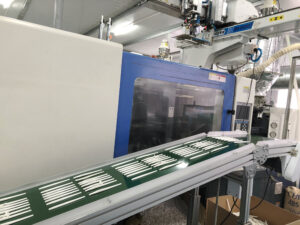
Medical & Automotive Injection Molding Parts | CNMOULDING China
2. Advanced Dimensional Verification (CMM)
For industries like medical and automotive, “close enough” is never acceptable. Therefore, our Shanghai facility is equipped with high-precision testing instruments.
Micron-Level Accuracy: We use Coordinate Measuring Machines (CMM) to verify complex geometries and tight tolerances. As a result, we can guarantee that even the most intricate rotary joints or housings meet your exact specifications.
Optical Inspection: In addition, we utilize digital projectors for non-contact measurement of soft or sensitive surfaces, ensuring no deformation occurs during testing.
3. Raw Material Integrity & Traceability
You cannot produce a high-quality part with low-quality material. Consequently, we maintain strict control over our supply chain.
IQC (Incoming Quality Control): Next, we verify every batch of resin—whether it’s medical-grade PPSU or automotive-grade PA66+GF—against its material certificate.
Full Traceability: Furthermore, we document every production lot. This means that years later, we can still trace exactly which batch of material was used for a specific part.
4. Real-Time In-Process Quality Control (IPQC)
Quality control must happen on the shop floor, not just in the lab.
First Article Inspection (FAI): Specifically, our QC team must approve the first 3-5 parts from a new run before mass production begins.
Patrol Inspections: Moreover, our inspectors perform hourly checks at each machine station. Ultimately, this proactive monitoring prevents a minor machine drift from turning into a major scrap event.
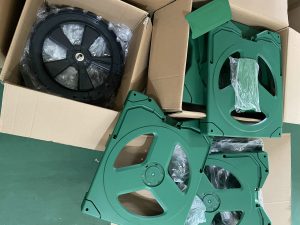
How To Improve Quality Control in Injection Molding
5. Tooling Maintenance as Quality Assurance
A well-maintained mold is the parent of a perfect part. Consequently, we treat mold maintenance as a core QC function.
Parting Line Integrity: We regularly perform “blue-fit” checks to ensure zero-gap sealing. As a result, we eliminate flash issues before they ever occur.
Preventative Cleaning: Finally, periodic cleaning of vents and sliders prevents surface defects and ensures smooth ejection.
The CNMOULDING Commitment to Excellence
Ultimately, improving quality control in injection molding is about building a culture of precision. By combining Shanghai’s top engineering talent with rigorous testing protocols, we provide our clients with the peace of mind they need for their most critical projects.
Looking for a China molding partner who takes quality as seriously as you do? Contact the CNMOULDING team today for a technical consultation!