

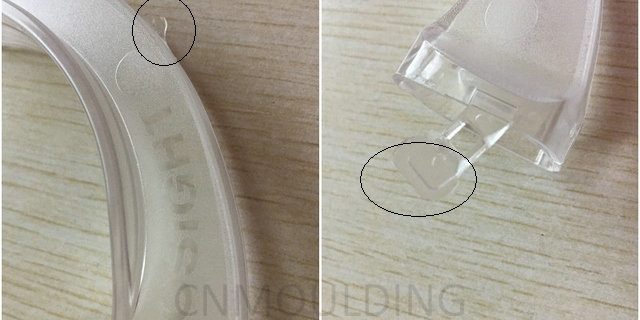
Plastic products flash
Achieving Ultra-Precision in Injection Molding: Tolerance Control to \pm 0.02 \text{mm}
Section 1: Introduction & Value Proposition
At CN-MOULDING, our injection molding expertise transcends standard manufacturing. We specialize in producing components with high precision and demanding tight tolerance requirements, crucial for the Automotive, Medical Device, and Advanced Electronics industries. Our Shanghai facility is equipped not only with state-of-the-art machinery but also with the decades of experience required to manage the unique challenges posed by complex geometries and sensitive engineering resins.
Section 2: Technical Capabilities & Process Deep Dive
Engineering Excellence: The Foundation of Precision
Achieving sub-millimeter accuracy ($\pm 0.02 \text{mm}$) starts with meticulous mold design. We integrate advanced DFM (Design for Manufacturability) analysis early in the process to predict and compensate for material shrinkage, warp, and internal stresses.
Advanced Tooling: Our tool room utilizes 5-axis CNC machining, high-speed milling, and precision EDM to ensure superior cavity surface finishes and dimensional repeatability.
Process Control: We deploy closed-loop, digital injection machines that maintain consistent melt temperature, injection speed, and holding pressure, guaranteeing shot-to-shot repeatability—the cornerstone of high-volume precision manufacturing.
Specialized Materials: Expertise in processing demanding engineering resins, including PEEK, PSU, PC, and high-performance Nylon grades, where material handling and drying are critical to final part integrity.
Section 3: Solving Complex Challenges
Beyond Standard Molding: Complex Geometries
We routinely handle complex challenges that simpler operations avoid:
Thin-Wall Parts: Successfully molding components with wall thicknesses down to $0.3 \text{mm}$ while maintaining structural integrity.
Insert Molding: Providing robust integration of metal inserts, ensuring reliable bonding and co-planarity crucial for electronic connectors and housings.
Optical Surfaces: Manufacturing parts with optically clear finishes (e.g., PC, PMMA) that demand zero defects, implemented through specialized mold polishing and clean-room environments.
Technological aspects:
(1) Injection or injection pressure is too high too fast. Because of the high speed, the mold opening force increases lead to flash. To be adjusted according to product thickness injection speed and injection time. Thin products use a high-speed rapid filling, after filling into the note no longer; thick products use low-speed filling and let the skin before reaching the final pressure is generally fixed.
(2) Caused by excessive charging flash. It is noteworthy that not to prevent excessive sag injected melt. So depressed may not be “filled”, and flash it will appear. Application of this case to extend the injection time or dwell time to resolve.
(3) Barrel, nozzle temperature is too high or the die temperature is too high will cause the plastic viscosity decreased, increased mobility, resulting in a flash in the case of fluid into the mold.
Raw materials:
(1) Plastic viscosity is too high or too low may occur burrs. Low viscosity plastics such as nylon, polyethylene, polypropylene, etc., should increase the clamping force; absorbent plastic or water-sensitive plastic at high temperatures will significantly reduce flow viscosity, increase the likelihood of burrs, These plastics must be completely dry; incorporation of recycled materials too many plastic viscosity will decline, if necessary, to supplement the residence ingredients. The plastic viscosity is too high, the flow resistance increases, resulting in back pressure so that the cavity pressure increase, resulting in insufficient clamping force and produce flash.
(2) Particle size uneven plastic materials will increase the quantity of flux, parts or complaints, or flash


