

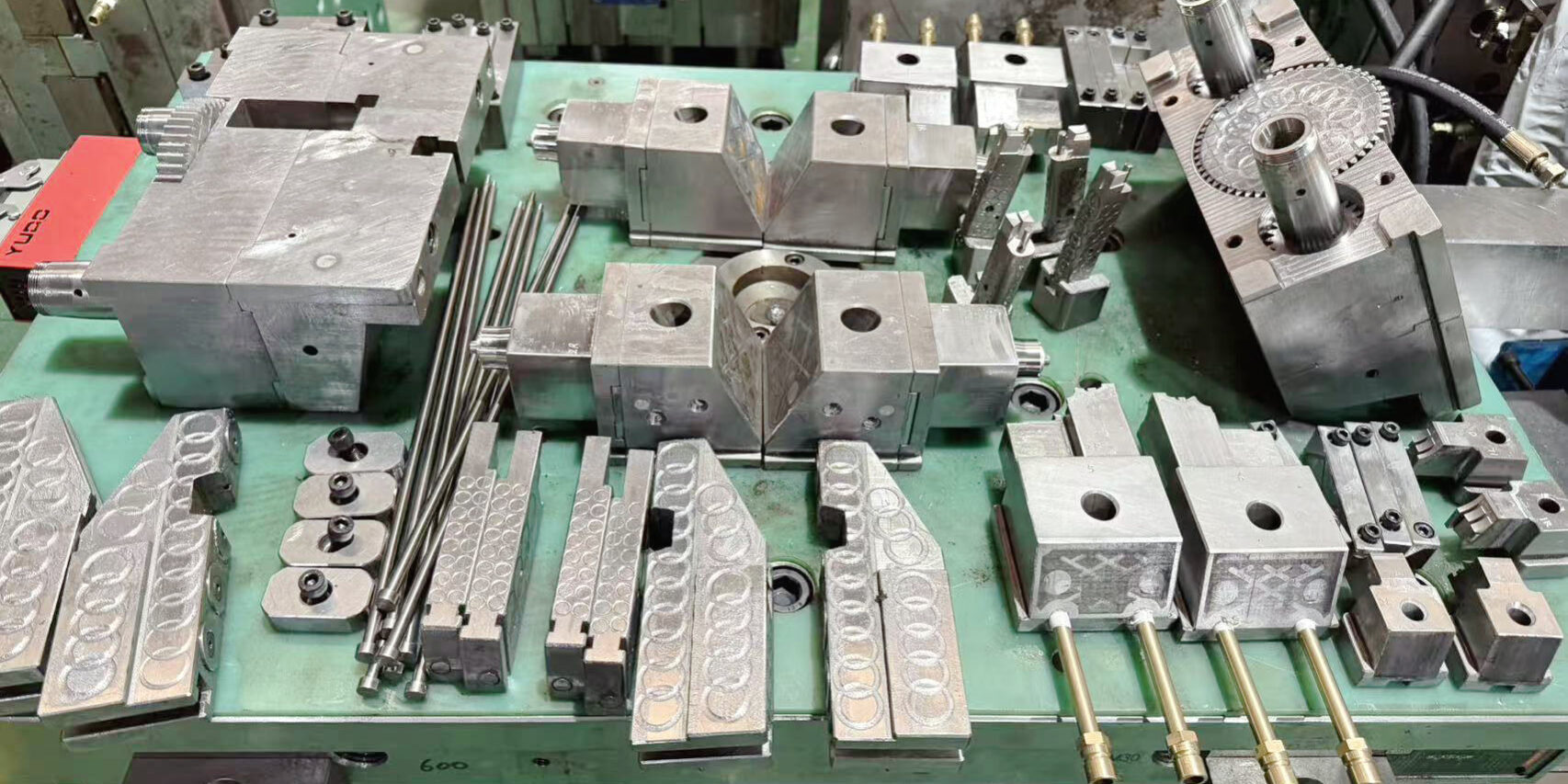
Strategic Steel Selection: The Engineer’s Guide to Maximizing Injection Mold ROI
1. The Volume-Based Strategy: Matching Grade to Life-Cycle
We categorize steel selection based on the SPI (Society of the Plastics Industry) classifications to ensure the investment matches the expected output.
Class 101 (1 Million+ Cycles): For high-speed, automated production, we utilize high-performance through-hardened steels like H13 (1.2344) or S136. These materials are vacuum heat-treated to HRC 48-52, providing the structural integrity needed to withstand millions of high-pressure cycles without deformation.
Medium Volume (100k – 500k Cycles): Pre-hardened steels such as 718H or P20+Ni offer an excellent balance. Since they do not require secondary heat treatment, they reduce the risk of dimensional warping and shorten lead times.
Prototyping & Bridge Tooling: For rapid market entry, Alumec 89 (Aluminum) is a strategic choice. Its superior thermal conductivity can reduce cycle times by up to 30%, though it is reserved for non-abrasive resins.
2. Solving Material Pain Points: Application-Specific Grades
This is where technical expertise separates a “mold maker” from a “precision engineer.”
A. The Optical Challenge: Achieving a Flawless Mirror Finish
When molding transparent parts or high-gloss housings, any microscopic impurity in the steel will appear as a defect.
The Pro Insight: We recommend S136—but with a caveat. For medical-grade optics, we specify ESR (Electro-Slag Refined) grade S136. The ESR process removes non-metallic inclusions, ensuring that after Mirror EDM and manual polishing, the surface remains pinhole-free at a micron level.
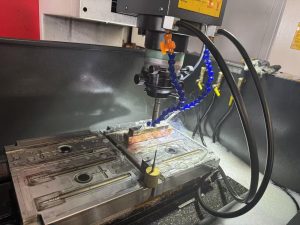
Injection Mold Process
B. The Abrasive Battle: Managing Glass-Filled (GF) Resins
Glass fibers are notorious for “eating” the parting lines of a mold, leading to flash issues.
The Solution: Selection is only half the battle. We pair high-vanadium steels like D2 (1.2379) with PVD (Physical Vapor Deposition) coatings such as Titanium Nitride. This boosts surface hardness to over HRC 70, significantly extending the maintenance intervals for abrasive applications.
C. The Cleanroom Requirement: Corrosion Resistance
For medical disposables, molds often run in cleanrooms where humidity and corrosive PVC gases are present.
The Strategy: We utilize high-chromium stainless steels like 420 or M310. Beyond preventing rust on the molding surface, these grades ensure that internal cooling channels remain clear of scale buildup, maintaining a consistent “pulse” in your cycle time.
3. The Shanghai Advantage: Manufacturing Integration
At our Shanghai facility, we don’t just “buy” steel; we manage its transformation.
Stress Relief via 5-Axis Machining: High-hardness steels can be brittle. By utilizing high-speed 5-axis CNC machining, we reduce the heat-affected zone during cutting, preserving the steel’s molecular integrity.
EDM “White Layer” Management: Electrical Discharge Machining leaves a brittle “white layer” on the steel surface. Our process includes meticulous secondary stress-relieving to prevent the micro-cracking that often plagues lower-cost molds.