


How to Achieve ±0.05mm Precision in Injection Molding
Achieving ±0.05mm tolerance in precision injection molding is extremely challenging.
Even when a 3D model looks perfect on the screen, the real molded parts can still come out slightly off. Temperature changes, material shrinkage, and machine stability can all affect the final dimensions.
In high-end manufacturing, “almost right” is never good enough. A small dimensional error can mean the difference between a product that works perfectly and one that fails completely.
So why is tight tolerance injection molding so difficult? Let’s break it down in simple terms.
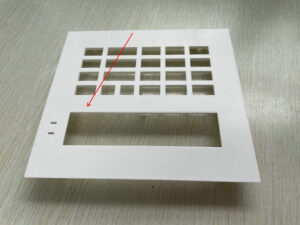
1. Steel Expands When Temperature Changes
Many people forget that steel is constantly changing with temperature.
The Problem
Steel expands when heated and contracts when cooled. Even small temperature fluctuations in the workshop can affect mold dimensions.
For example, steel expands approximately 0.012 mm per meter for every 10°C temperature increase. When you are trying to maintain a tolerance of ±0.05mm, even a small temperature shift can create noticeable dimensional variation.
This is why precision molds sometimes produce slightly different parts in the morning compared to the afternoon.
The Solution
At CNMOULDING (Shanghai), high-precision machining equipment such as 5-axis CNC machines operates in temperature-controlled rooms.
Maintaining a stable machining environment ensures that mold steel remains dimensionally consistent during the manufacturing process. In precision tooling, controlling temperature is just as important as controlling the cutting tool.
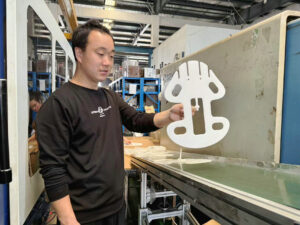
2. Plastic Shrinks and Warps During Cooling
Plastic behaves very differently from metal.
Instead of staying stable, plastic shrinks as it cools, and that shrinkage is not always uniform.
The Problem
If a plastic part has uneven wall thickness, different areas will cool at different speeds. This can cause:
Warpage
Sink marks
Dimensional deviation
In tight tolerance applications, even minor shrinkage variation can push a part outside the required specifications.
The Solution
Rather than relying on trial and error, we use Moldflow simulation software to predict the behavior of the molten plastic before the mold is manufactured.
Moldflow allows engineers to analyze:
Material flow patterns
Cooling behavior
Shrinkage rates
Warpage risks
By identifying potential issues during the design stage, we can optimize gate locations, cooling channels, and wall thickness before the mold is cut. This approach saves weeks of adjustment time and reduces costly modifications.
3. Injection Machine Stability Matters
Even with a perfect mold, part quality still depends heavily on the injection molding machine.
The Problem
Older or lower-quality machines often struggle to maintain stable processing conditions. Small fluctuations in injection pressure, speed, or temperature can cause inconsistent parts.
If processing parameters vary by even 1% between cycles, the molded parts may show dimensional differences.
The Solution
Precision molding requires high-performance injection machines, especially all-electric injection molding machines.
These machines offer:
Precise injection control
High repeatability
Stable pressure and speed profiles
At CNMOULDING, every molding cycle is monitored closely. Process parameters are tracked to ensure consistent production quality from the first part to the last.
This level of process stability is essential when manufacturing medical components, automotive connectors, and precision electronic parts.
4. Accurate Measurement Is Essential
There is a simple rule in precision manufacturing:
If you can’t measure it accurately, you can’t manufacture it consistently.
The Problem
Many factories still rely on traditional measuring tools such as handheld calipers or micrometers. While these tools are useful, they are not precise enough for micron-level measurement.
The Solution
For tight tolerance projects, we use advanced inspection equipment such as:
CMM (Coordinate Measuring Machines)
Optical measurement systems
Automated dimensional inspection tools
These systems can measure complex geometries with extremely high accuracy and generate full inspection reports.
Customers receive detailed dimensional reports verifying that every critical feature meets the required tolerance.
Where Tight Tolerance Injection Molding Is Required
Precision plastic molding is especially important in industries where dimensional accuracy directly affects performance.
Common applications include:
Medical devices
Automotive connectors and sensors
Precision electronic components
Optical and communication devices
In these industries, a tolerance difference of just a few microns can impact product functionality, assembly fit, or long-term reliability.
The Bottom Line
Achieving ±0.005mm precision in injection molding requires the right combination of technology, expertise, and process control.
Three key factors must work together:
High-quality mold steel and precision machining
Stable, high-performance injection molding machines
Experienced engineers and advanced simulation tools
At CNMOULDING (Shanghai), we have spent years mastering these critical factors. Our engineering team focuses on solving the difficult challenges in precision molding so our customers can bring their products to market with confidence.
If your project requires tight tolerance injection molding, our engineers would be happy to review your design and discuss the best manufacturing approach.
Contact our Shanghai team today to start your next precision molding project.


